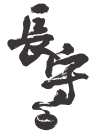
A complete English translation of the original Chinese journal published by Changshou.
Prelude
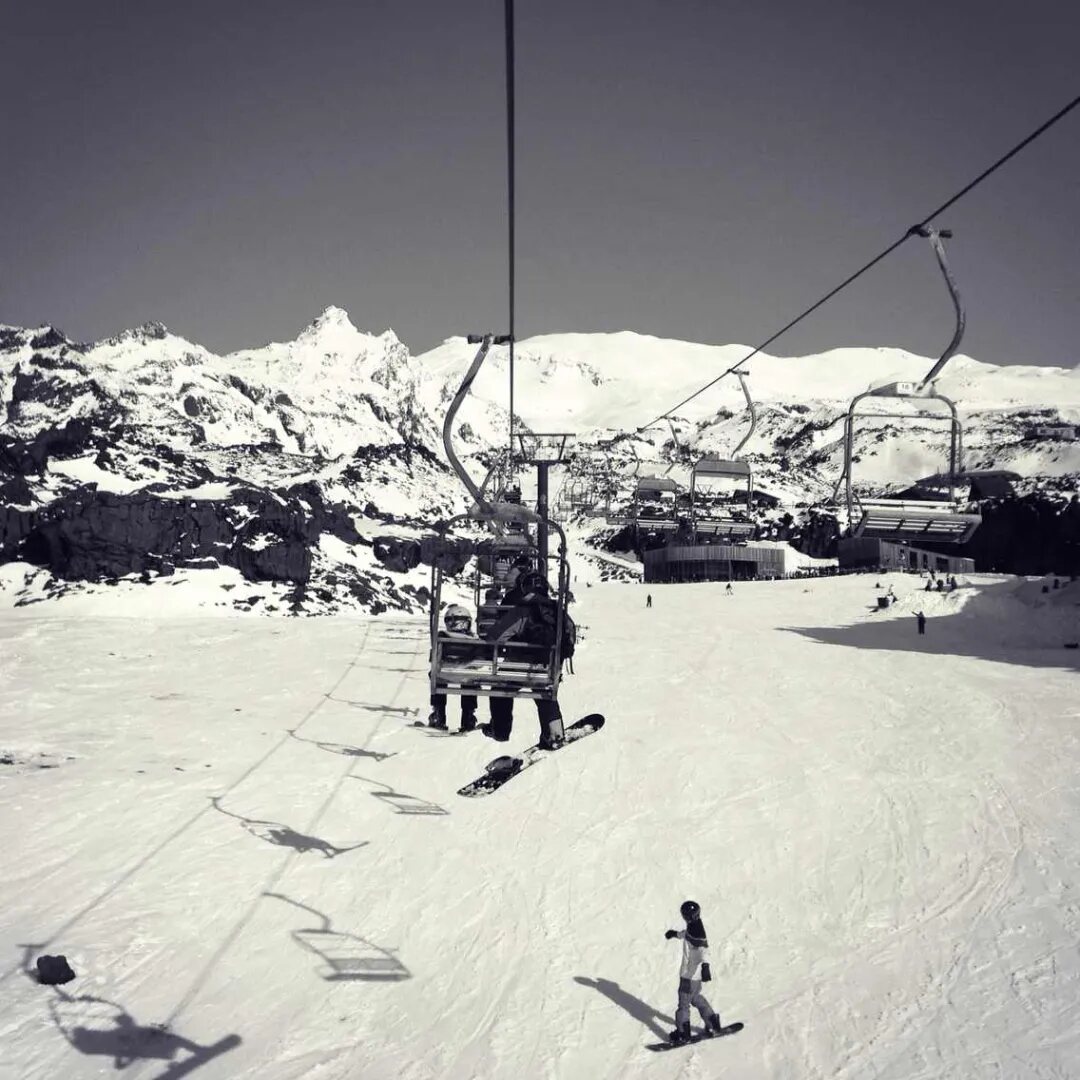
0. The weather cleared today. My first time on a snowboard: I fell on the descent and the board struck the back of my head. Carrying it uphill, I heard people on the chairlift cry out. I turned around. Across the pure white snow ran a dark-red line of blood.
0. In an interview, Raymond Carver explained how he had changed: ‘I think the feeling now is a little more optimistic. Of course, in most of the stories the characters’ troubles are not resolved. Their aims and hopes wither. But sometimes—and perhaps often—the people themselves do not wither. They pull up their sagging socks and keep walking.’
0. I walked a long way yesterday. Now I am eating a banana.
2015—2019
1. Every day I watched the tea room change a little; every day something new was added. At night I stood inside and looked around as a feeling of fullness rose in me. Renovating was like bringing a life into being—long and painful, but also full of pleasure. The greatest pleasure was that the tea room needed company. To accompany something for a long time: that is the meaning of Changshou.
2. Xiangxiang and Sister Xiaofang came to Shaxi to sketch. From the old courtyard where they stayed, they could see the fields. One day they came to the tea room to borrow books, and we became friends.
3. We should spend New Year together from now on. Walking alone through strange streets, no one anywhere; only red lights waiting to turn green, fallen leaves and scraps of paper racing about. The sky was grey and far away. Just as I looked up, a light rain suddenly began.
4. My first journey into the tea mountains was in September. I rode a bus for hours: dust, dirty seats, the vehicle jolting along mountain roads. I fell into a heavy sleep and woke at dusk to find we had reached Jingmai. Outside the tea factory, evening clouds hung low. Monks in orange robes charged across a playground, playing basketball. I heard sandals scraping, the ball striking the ground, and a temple bell at dusk. Above the clouds, the last light bent into a rainbow. My head was still foggy—as though I were both on Jingmai Mountain and beneath the water.
5. In the morning nothing seemed real. The sky was as clear as a mirror, with the town and mountains floating inside it. We went running, our feet so light they might lift into flight. By autumn Shaxi was bleak and emptier still. The overcast sky made me want to leave. I remembered a line by Abbas Kiarostami: ‘This time the geese descend; the reeds have already been cut.’
6. Differences in elevation create a time difference between the town and the mountains. In the ravines, poplar leaves had turned yellow, making a tapestry with pine and cypress, while the town’s trees were still green. Autumn seemed to be walking slowly down from the mountains; you could see its footsteps. Mapingguan, almost three thousand metres high, is the village farthest from town. People raise their corn baskets on wooden frames so poultry cannot reach them. On the way back, someone had burned rice straw in a field and left while the fire continued. Smoke spread like river water and cut off the road down the mountain.
7. Playing by the river and in the hills, we met an old man tending sheep. The sheep grazed while he sat on a mound reading Expanded Words of Wisdom.
8. Concentration can bring awareness, but awareness may also arrive without effort. It is like air. To be unaware is to rehearse death in advance: a rigid, numb, lifeless condition.
9. While I learned woodworking in Xizhou, an entire snowfall passed. Master and I discussed New Year wishes. Borges said the thing most worth pursuing in life is wisdom, then love, and only then happiness. Happiness can sometimes be trivial.
10. From Soetsu Yanagi’s The Way of Craftsmanship: ‘Ugly craft displays every possible technique. In its final period, craft loses its life and calls the surpassing of useless technique good. Makers founded on knowledge often fall into this error. People mistake technique for beauty, but beauty is life; technique is only the shell.’
11. Yang Chenglin is carpenter Master Yang’s daughter. She was only five when I met her. After rain, under a sky bright with cloud shadows, her grandmother combed her hair in the courtyard while I stained wood with soy sauce. Yang Chenglin’s eyes were bright. She stared into empty space, and I wondered what she was thinking. It seemed she held secrets of the universe—secrets we once knew and then suddenly forgot.
12. ‘I became friends with a photographer, so he gave me this card. When I passed his stall, I asked him something in Thai. He immediately grew excited and poured out a stream of words I could not understand. I stopped and looked through every photograph: interesting and joyful, simple and direct. At exactly six in the evening, a broadcast sounded across the street. Everyone stopped and turned toward it. The national anthem began slowly. In the soft twilight people looked peaceful and at ease. It was a weekend evening in Chiang Mai, a sacred moment.’ —A postcard from Emma.
13. Before sunrise, Taoxing and I secretly went kayaking on Erhai Lake. Dawn was just appearing as we crossed the field paths. Taoxing said he was born in the morning and therefore loved mornings. The kayak rocked on Erhai as the sun rose behind the clouds, laying gold across the lake and over us.
14. I learned to observe wood. Faces of immortals were hidden in its grain—the gods of small things. Be gentle when swinging an angle grinder; do not hesitate when swinging a machete.
15. Reading Luis Cernuda at night: ‘You, world without virtue, I ask nothing more of you—only a little patch of blue, in the air and in my heart. Let wealth and power belong to others; I only want to remain with my light, my love.’
16. The Lancang is the River of the Gods. The beings and spirits of the Yunnan–Guizhou Plateau all come from this river. We drove from the tea mountains to the dock. The exposed mountainside marked the flood level of earlier years. Broken beer bottles covered the warm concrete. Returning, we saw people burning land in the hills, a field of fire rising far off in the darkness.
17. Before dawn, Ani carried her basket to the tea fields. Shuangyun and I turned sun-dried maocha in a winnowing tray and picked out yellow leaves. Half asleep, he muttered while roosters called on all sides. The dry tea smelled of leaves and sugarcane. While packing tea, Brother Yang suddenly stood and leaned against the wall, holding his waist. He turned to us in pain: his kidney stones had returned. Then the sun rose—our last morning in the Lancang mountains.
18. Wang Yuyan was in second grade. Today she asked me to catch birds. I ignored her. ‘Today I discovered that you are a very cold person,’ she said. ‘Sorry. I just got back and I’m tired.’ ‘Why do you always say sorry? Nobody at our school ever says sorry. They never fight either. It’s so boring that I have to be naughty by myself.’
19. While eating, I heard a mother opposite us teaching her child to crack sunflower seeds. ‘You know, every person is unique—including me, your father, and you. Everyone is different. If we were all the same, one person would be enough. Why would we need two? These seeds are all different too, so you must treasure them and eat them one at a time.’
20. Reading Auden’s poem There Will Be No Peace, I thought of Ang Lee’s answer when asked why he made films. He said he made them because he wanted to; if he did not film what he wanted, it would keep disturbing him and never let him rest.
21. Workers digging beside the river uncovered a dragon’s head, and we hurried over. On the dark riverbed we could just make out a stone-carved head emerging from the soil. One horn was white; the other seemed broken. The owner of the land wore a heavy coat and lit a fire beside the site while waiting for officials to inspect it. It was like entering a dream. By the next day the dragon head had been removed and everything was normal again. Like a dream remembered only by me.
22. Gu Cheng said that a thoroughly honest person never faces a choice. If you are an apple tree, however much you long to grow oranges, you can only bear apples. The fruit you bear has nothing to do with longing. Before an honest person, the road is always clear and singular.
23. Passing Tian Café, I saw Taoxing locked inside, watching a Mexican film and waiting for his girlfriend to return.
24. People use Kong Yiji and Ah Q to mock another person’s weakness. It makes me sad. I sympathise with both of them and feel that I resemble them.
25. Wang Yuyan said: ‘Some people in this world are straightening their curly hair, while others are curling their straight hair.’
26. Impossible weather: hail on one half of the sky and sunshine on the other. As we rode a motorbike through the fields, a white bolt of lightning about five metres wide struck nearby. Terrified, we accelerated away.
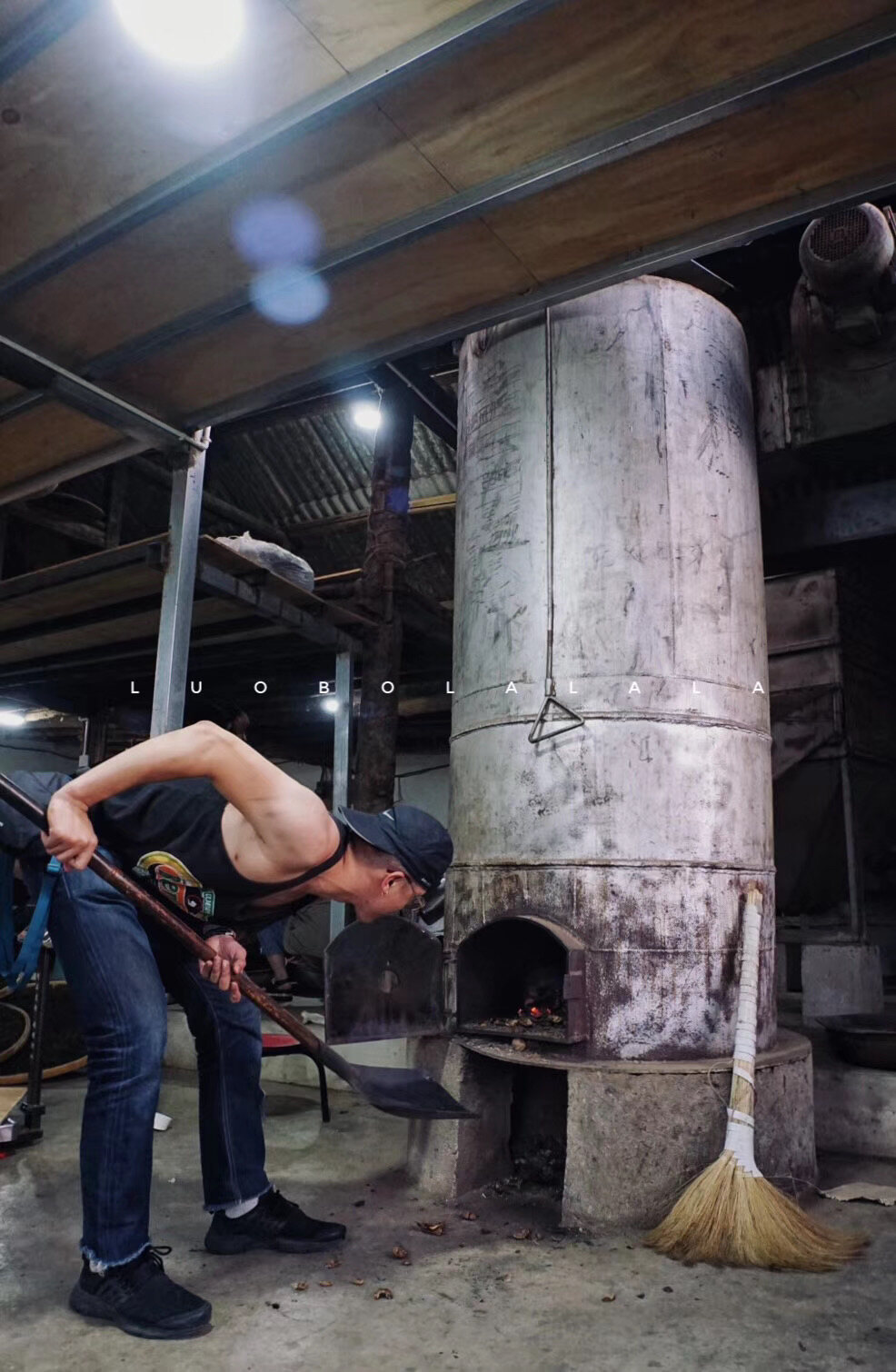
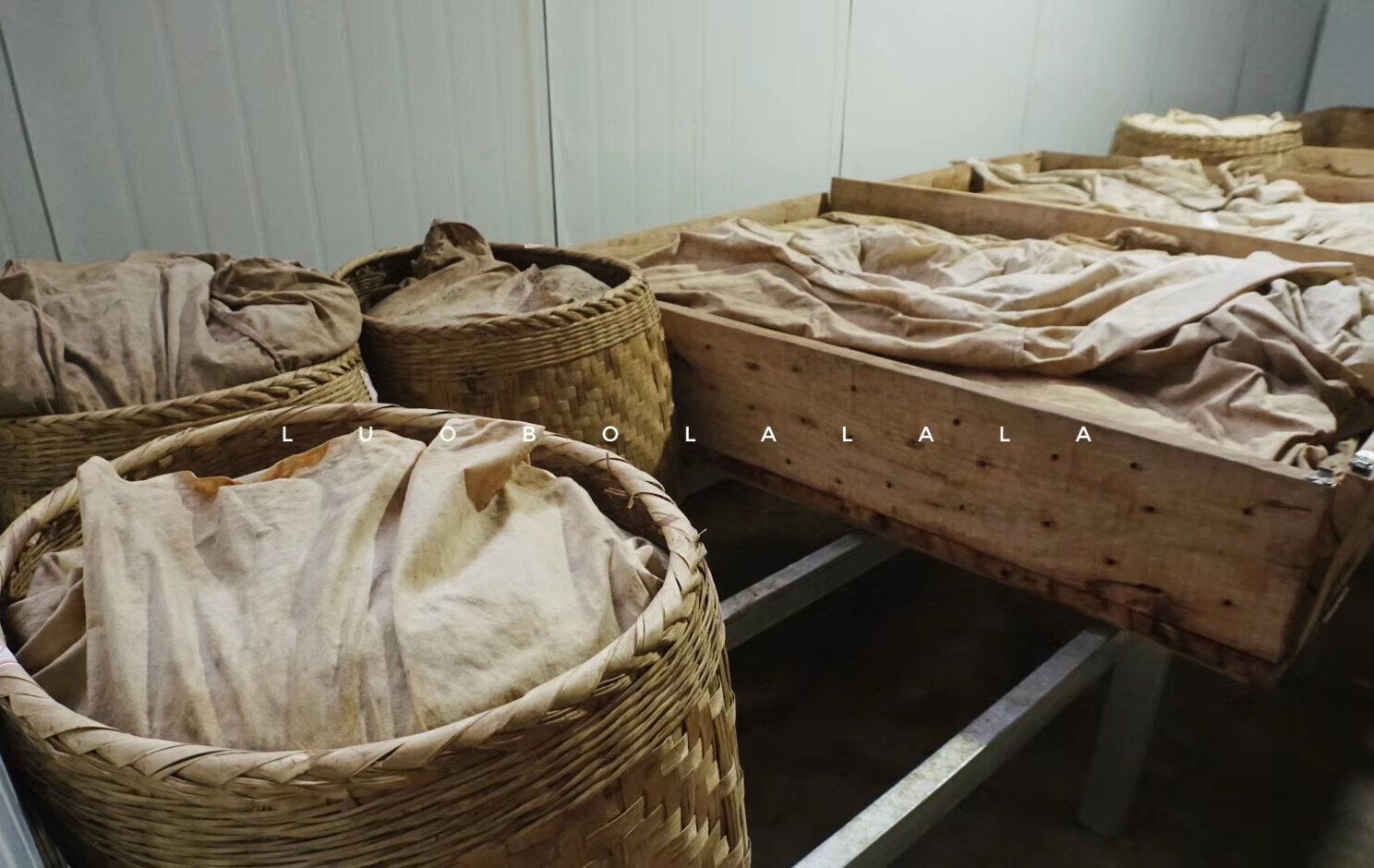
27. Freshly picked tea entered the withering trough, then was rolled and fermented in wooden boxes and cloth bags. It went into an old dryer fired with walnut shells and charcoal. A dark rose fragrance rose from the oven, and gentle warmth filled the workshop.
28. In the tea mountains I saw a school blackboard notice about the Qingming Festival: ‘In the past, some people released their kites into the blue sky, then cut the string and let the clear wind carry them to the ends of the earth.’
29. Guangcan came for tea and said that, like a character in Border Town, he had once talked with his grandmother about the future. She asked what he wanted to do when he grew up. He wanted to live in a small town with a river, in his own thatched house with a patch of soil outside for vegetables. Ideally a road would pass by—not too wide, only wide enough to park a red Ferrari.
30. After living in cities for too long, I grew accustomed to paved roads. I forgot that earth was their original condition and began to dislike the soil.
31. Everyone has a field that belongs to them. The different colours given off by these fields speak of their relationship with people. I slept upstairs for twenty minutes and woke restored. A pile of books had been pushed into the corner. A rainy day.
32. It always rains toward evening on Jingmai. When the weather turns, white tea drying in trays must be brought in at once. Rain drums against the windows. This year’s white tea is called Rain Drum.
33. It has been a long time since a bookshop made me this happy. It held an unusually complete selection, and nearly every book was good. The architecture was good, the atmosphere was good. Apart from me playing with my phone, almost everyone was reading.
34. I dreamed I lived beside Wang Bo. He was absorbed in an essay about why people behave badly when drunk. A great monk passed his house and asked him to find the world’s largest gourd and its smallest teapot. Wang Bo had a potter fire a teapot no bigger than a grain of rice; it was almost impossible to find in the kiln. The master looked and said, ‘Very close, but still not quite.’ I told Wang Bo, ‘The largest gourd can hold the whole world, so there is no need to search for it. The smallest pot cannot be seen by the naked eye—if you can see it, a smaller one can still be found. So give him nothing.’ Wang Bo replied meaningfully, ‘Emptiness and form are not two.’ Then I woke.
35. Our neighbour planted tall bamboo, and its leaves formed a thick layer on the ground. The courtyard was usually empty, so two feral cats nested in the leaves—one patterned, one black—curled together in the shape of a taiji.
36. Once you grit your teeth and solve a problem, a new problem grows from its foundation. For every seemingly insoluble problem, the answer appears only at the moment you decide to face it.
37. Shaxi is truly beautiful. Its beauty is complex and difficult to express; some of it leaves a person bewildered. It made me think: perhaps we do not have to live forever in tension, understanding everything clearly.
38. Young Master Yang left to work elsewhere, so we found another carpenter to help renovate the courtyard: Old Master Yang. We went together to the timber yard for shelving. He circled piles of hemlock, pine, and Chinese parasol boards. ‘Why not make the horizontal and vertical pieces from the same boards?’ he asked. ‘The uprights are so thin—can they hold?’ ‘Of course. A straight piece of wood can support a thousand jin.’
39. Returning to a valley after a long absence, we found two great trees had fallen. Uprooted, they had brought down enough stone and soil to bury the ground around them. Two large holes remained where they had stood. ‘That is nature,’ Guangcan said. He took out his shakuhachi and calmly began to play.
40. To prove that straight wood could support a thousand jin, Old Master Yang stood on the bookshelf.
41. Market day is every Friday. There are two kinds of vegetable sellers. Most sell what they grow themselves. The others are professional traders: Shaxi today, Jianchuan tomorrow, Eryuan the day after, moving from market to market. One trader arrived in a large truck filled with vegetables collected from everywhere. A farmer preparing to leave carried him a big sack of yams. ‘Could you sell these for one yuan a jin?’ The trader answered expertly, ‘Ah, difficult. One yuan at most. Leave them here.’ ‘At least weigh them. I was getting two or three yuan earlier.’ The trader laughed and pressed twenty yuan into his hand. The farmer waved it away. ‘That’s not enough. There are at least forty jin. Give me thirty.’ They argued and settled at twenty-seven. Taking the money, the farmer complained, ‘Honestly, you…’ and walked off happily. The trader raised an eyebrow at me. ‘Watch your brother teach you business.’ That was how we met Zhang Wei.
42. One Shaxi New Year custom is slaughtering the family pig. Brother Wu’s household in Silian village was preparing its feast. Guangcan invited me in the morning, but I delayed until four, when Luo Bo and I slowly walked the dogs along a dirt road to the village. We stopped beneath the opera stage. ‘Just in time for dinner,’ Guangcan said. After barbecue, several bearded men drank around a table. Brother Hai was delighted: New Year had arrived early. Homemade liquor comes and goes quickly, he said, so you can drink more. Brother Wu embraced another jar and laughed that there was not enough. Someone began a Bai melody. Brother Wu took out his xianzi, Guangcan his shakuhachi, and another man raised a shining saxophone. They played the Scottish song Auld Lang Syne. Long bass notes rolled through me; bone and flesh vibrated together. Opposite me, Guangcan’s eyes shone and a tear fell. ‘Should old acquaintance be forgot…’
2020—2022
43. Many things happened at once in the new year. Kobe Bryant died. A fire burned for hours in the mountains at Jiangwei. Sunlight passed through smoke, turning the sky a strange orange-red. COVID began spreading, bringing back memories of SARS: fear, collective blindness.
44. Has it really been seventeen years since SARS? Why does it feel like only a few? I remember life seventeen years ago and people angered by the same injustices; the anger never seems to go out of date. When discussing whether our response to epidemics and major public emergencies has improved, people prefer to believe it has, because society advances and the economy develops. Seventeen years have passed, after all; our phones changed from Nokias to iPhones. Such transformation ought to touch everything—but it does not. If we do not care or question, some things never change and history repeats the same tragedies. Believing that the passage of time automatically makes people progress is precisely what prevents progress.
45. Without warning, the Shaxi authorities sent workers to replace every street lamp with a standard lamp bearing the words ‘Shaxi Old Town.’ They said leaders would inspect the town in a few days. Could we change them back afterwards? The electricians did not know. Could our own lamp remain if it suited the old town? No—we had to cooperate with the inspection. Shops closed by the epidemic did not even know their lamps had been changed.
46. After seeing several human tragedies in Wuhan, I began to understand people who block the news because there is too much ‘negative energy.’ Human endurance is limited, especially when you realise there is nothing you can do but watch. Yet helplessness does not disappear through surrender. It recedes when we change what we can and do well what is within reach. Years later, Sartre amended the claim that existentialism means people choose entirely for themselves and bear total responsibility. He changed it to: ‘Within limited choices, a person chooses and takes responsibility for the self.’
47. I played football with a friend who teaches high-school mathematics and asked whether students caused trouble during online classes. ‘They all have the same avatar,’ he said. ‘You cannot tell who is who. After I explain two problems, somebody writes underneath: “That’s it?”’
48. Between the egg and the high wall, always stand with the egg. Do not erase, inform, or attack people for belonging to another group. Hope for a space of speech that is more open and tolerant.
49. ‘Almost every conflict in human relationships begins when we intrude on another person’s task, or another person intrudes on ours. Interfering with—or even taking responsibility for—another person’s task makes one’s own life heavy and painful.’ —The Courage to Be Disliked.
50. I dreamed a sentence: ‘I placed my watch on the lid of the coffin.’ In the dream I explained it to myself: ‘We are all bargaining with our own deaths for time.’
51. I dreamed that I went to find Yankǎn to make tea. He said the weather was too dry and the bushes had not budded. Together we picked four jin of fresh leaf. ‘That’s all,’ he said. ‘There is no more. The whole year is like this.’ It was painfully hot. Sitting under a tree, I felt close to heatstroke. Yankǎn said a friend made incense; perhaps I could sell incense instead. I thought about it. It was an option. Back at the tea room, we lit many kinds. In the dream they smelled wonderful.
52. The mountain roads are difficult, so Brother Hai and I discussed buying a car. ‘Wuling Hongguang makes an SUV now,’ I said. ‘You could consider it.’ ‘No. I’m afraid people would laugh at me.’ ‘That’s vanity.’ ‘Yes.’ ‘Why care what people think?’ ‘I just do.’ Brother Hai was silent for half a second. ‘Actually, I care a lot too.’
53. Meditation is wonderful. Its steadiness and concentration raise awareness of the body, surroundings, the rising and falling of thought, and even stillness. These can be carried into ordinary life. Feelings are seen, becoming more fluid and inclusive, and a larger freedom appears.
54. In the tea mountains we ate honey from tiny bees, green mango dipped in chilli, and plums and corn brought from Jiangcheng.
55. When I collected a parcel, the woman at SF Express asked, ‘Tea ware or something else?’ ‘A game console.’ I opened it and sat down to play. The man from SF came in, looked at me, and said: ‘Being a child is best. Don’t grow up—never grow up. When you reach our age, life becomes difficult.’
56. I dreamed I travelled through time to assassinate a couple. They were young and well dressed, worked as cleaners, and seemed happy. I asked the year. It was 2000. Had the Olympics happened? They thought I meant Rio. I felt pity and told them to marry quickly because the world would grow worse. This was 2000; the economy still had time to soar. We had grown accustomed to peace and flourishing. We could not imagine extreme climate, epidemics, financial crisis, isolation, and war all coming within reach. Even in the dream, I felt alone and without help.
57. We passed a small football pitch where children were training. Mother called the coach over and pointed at me: ‘He wants to play here. How does he get in?’ The coach froze. I tried to help: ‘She means, is the field usually open to the public?’ ‘Sorry, I’m only the coach. Ask the security guard at the property office.’
58. At night I found these words by Jirō Taniguchi and thought how far away he is now: ‘It is as though one can glimpse that world and image, but crystallising it into form requires an exhausting labour. Yet if one overcomes the pain, joy will come—this too is beyond dispute.’
59. During National Day, our middle-school study monitor and class leader visited. The class leader told me: ‘Do people like us still care about morality? Were we ever treated morally? Eighty per cent of people in the world may be ugly or poor for one reason or another. They may still be kind, but whether they are moral is not the most important thing to them. From high school onward I thought I was a bad student, because in that class I truly had to work hard to do well while others did it without trying. When I came back from studying abroad, colleagues called me a top student and I resisted it. If you never look at a thing from within, and see only its external conditions, you can never truly understand it.’
60. When do I feel as if I am living in a film? ‘I’m thirsty.’ ‘Buy whatever you want.’ ‘I ate your rice noodles and you tell me to buy my own drink? Shameless.’ ‘Fine, I’ll buy one.’ ‘I’ll go myself. Don’t imagine you are important. Embarrassing.’
61. Humanity’s main source of energy is the sun.
62. Writing is honesty, and it is also trying every method you can imagine.
63. Tense, combative effort is useless. The key is relaxation. ‘Only through surrender, by giving up resistance and becoming “vulnerable,” do you discover the truly essential and indestructible nature within you.’
64. Many things begin as nothing more than a kind connection. When conditions ripen, a result comes naturally. The less rigid and the more yielding we become, the more astonishing life appears. The moment we demand something, we move away from it.
65. Why not to use an air-source heat pump in Shaxi: we find a problem but do not know what it is; we identify one and try to solve it, feeling progress; we discover that it remains unsolved and was never the real problem; we begin searching for the actual problem; we find it and realise we cannot solve it—the boundary of self-knowledge has been established.
66. If we are part of a river, the small self seems always to have separated from the water and resisted its movement. When we see that we are the river, the small self dissolves. Nature’s force enters and opens a spacious, boundaryless experience—an experience of union. Then, as you said, many things may cease to matter. Resistance and control are accumulated energy, like trauma, karma from earlier lives, or habit. Constantly reinforced, they form a complex assembly of modules, the labels and personality composing the ‘I.’ Before nature’s energy, the small self is a blockage, forcing the river to bend around it.
67. Xingxing has been missing for two days. Has anyone seen her? She is a small female cat, unafraid of people, very gentle, fond of rolling in dust and asking for affection. Without her collar she may have been mistaken for a stray and taken in. Please contact me with any news.
68. I hope that whenever we face a choice, we choose courage.
69. ‘On the eighth day of the second lunar month, Prince Siddhartha left the city and saw the suffering of the people. He resolved to become a Buddha and deliver all beings.’
70. Yang Li put it well: trust the people around you.
71. I tried to speak with the self inside my mind. I found that it was composed of thoughts and energy. Yesterday’s thoughts—only energy, only thoughts. Nothing is incapable of change.
72. The wall behind the bookcase was shared with the neighbour and had been demolished. Before the new wall was built, we nailed up a sheet. Xingxing was delighted: another piece of cloth to burrow through.
73. Xingxing can look melancholy too, perhaps tired of waiting for the door to open.
74. Recently I asked several fellow practitioners why Buddhist study and meditation seemed to bring more troubles, leaving me with a sense of losing control as habits and obstacles emerged. At first it is easy to divide meditation from life and imagine a better state—more peaceful and joyful. But an oppositional, divided mind strengthens attachment and pain. Practice and life should not be split, because peace and joy do not live in a different life; they live inside us. A bad state is a test and may mean awareness is growing. Even retreat can be progress. As awareness rises, troubles also become visible. We notice what we could not feel before, but without enough inner strength this easily becomes distress. We must cultivate steadiness, compassion, equanimity, and nonattachment: do not follow every thought or fall into stories of our own invention. Facing rise and fall, keep faith in the Dharma and the method of practice. Seeing reality is often unpleasant, which is why we do our best to remain deceived. When we recognise impermanence, suffering, and non-self, we may be frightened: everything we pursued was unstable, impossible to control or possess, contrary to worldly teaching. Conflict naturally follows. Yet that is precisely the moment to raise awareness. Awareness now is liberation now. Do anything with an unattached mind; nonattachment itself is the result.
75. Back home doing laundry, I remembered my first visit to Jingdezhen. In the old factory I met Daqing, throwing clay alone in a tiny workshop. Rain made the roads muddy. His eyes were bright as he eagerly showed me his rented room. While washing my clothes, I washed his too and turned the collar of his white shirt yellow. Between learning pottery and firing kilns, we stayed overnight in internet cafés playing games. When we came out, morning had arrived. Sunlight lay on the road and a street-washing truck moved past playing beautiful music.
76. Deep knowledge of something can instead invite misunderstanding. Then the only response is silence.
77. In the mountains, the flash of a bird passing. A person raises her head and may disappear into mist at any moment. Lit by the sun and drawn to the path of a bird crossing the clouds, she becomes a faint, transparent, shadow-like creature. Mist and sunlight seem able to pass through her without resistance.
78. As a child I walked to school with the boy upstairs. In summer he cut through tall grass in shorts. ‘Aren’t you afraid of mosquito bites?’ I asked. ‘No, I sprayed repellent.’ Another time rain began after school. I had no umbrella and had to stay behind to clean. I asked a girl without an umbrella what she would do. Calmly she said, ‘My clothes are waterproof. I don’t need one.’ I did not believe her, so she put her sleeve under the tap, turned the water fully on, and said, ‘See?’ I want to believe in something that simply.
79. When your foot goes numb, keep attention on it and the numbness and pain recede more quickly. Massage reminds us to notice muscular tension we usually miss; increased attention can do the same actively. Treat emotions and feelings in this way and the traps of thought slowly disappear.
80. A good environment does not mean absolute safety or fairness. It means that people continue to feel hope: there is a road when they step outside, and even when someone is driven into a corner, another person will stand against injustice.
81. We do not need a home given by someone else. We must discover and build one ourselves—here, perhaps, between the mountains. Home is not fixed; it is a fluid feeling that travels with you, supporting and containing you.
82. When body and mind are unwell, do not hurry to begin anything. First feel bodily pain and mental exhaustion, and notice how they respond when awareness rests on them. A runner ties their shoelaces first. You cannot go far in a shoe whose lace is loose.
83. Effort made inside an illusion does not change the nature of the illusion.
84. It is like having a piece of chocolate cake and feeling happy because I can eat it. I put it in the refrigerator to preserve the happiness. By the time I eat it, perhaps it is not so good; it has passed its best. Then I realise that what I loved was the happiness of having something to anticipate.
85. Dahe has been away from home for three days. Friends in Shaxi, please contact us if you see him. Thank you.
86. Sappho’s language is pure, without elaborate poetic technique, and for that reason it feels more like poetry. Strip away culture and skill, layer by layer, and poetry gives us the vibration of emotion, an experience of the divine.
87. Honesty is neither resistance nor escape.
88. ‘If a lot of pain is waiting for me at home, I don’t want to open the door.’ —Lei Tianpei, speaking about love.
89. When rain comes in autumn, every leaf drips. At night I saw Mother secretly wiping tears. She wanted to give me some of her strength, while I always secretly returned it.
90. Crossing the river, a fellow practitioner said, ‘The stones are no problem. It all depends on you.’ At the restaurant: ‘One bowl of spicy beef noodles, without the spice.’
91. A halal Lanzhou noodle shop is good wherever it opens. Near a bus station it will be far cleaner than its surroundings. You can feel human kindness through the food. Its consistency surpasses McDonald’s.
92. If the mind is clear and still, you can feel everything. Nothing else is a problem.
93. I did not even finish The Castle and fell asleep twice reading Amerika. Kafka belongs to intuition; he is someone who appears in dreams. Beside him, everyone else is too rational.
94. Luo Bo held Beidou. ‘He feels safe and unfree at the same time.’
95. A visitor said: ‘We live in the north. In winter, coal-fired floor heating runs like blood vessels, central heat spreading through the whole city. People indoors wear shorts and T-shirts and eat ice lollies. The difference between inside and out must be more than twenty degrees. The wind is a knife against your skin. Raw tea feels wonderful then. We mainly drink ripe tea when summer rains arrive and mornings are cool. Northern personalities are like the weather: when it rains, it pours everywhere at once.’
96. In 2012 I went to Dali to visit Sansan, who shared a rented room with friends. Dali’s sky was deep blue and clean. White clouds moved slowly; the air was cold. In the morning we bought vegetables at the market north of Xiaguan, where the streets were lively. Leaving Xiaguan, I planned to travel to Shangri-La and then Tibet. Sansan said she had heard Shaxi was lovely and that I could stop there on the way.
97. ‘A London newspaper once asked the writer G. K. Chesterton to answer the question “What is wrong with society?” His reply? “I am.” The root of society’s disorder is in me.’
98. ‘Too many people pay too little attention to the thing itself, while too many exhaust themselves over tiny differences.’ —Luo Bo, on drinking tea.
99. Didactic language has little power. A novel lets a person undergo something. It is abstract and exact, and sometimes unexpectedly gathers strength into one place.
100. I made too much rubbish and could not bear to throw it away, until I lived inside a castle built of junk. One day I finally made something good. I looked at it and shook my head: it was too good for this place. I gave it to a random passer-by.
101. In Takemitsu Zamurai there is a young master abandoned by a wealthy family. He keeps a male lover, idles every day, wanders the pleasure quarters with him, and challenges people to duels. Hearing that a highly skilled serial killer has appeared, he puts on armour, mounts a white horse, takes a long spear, and goes out to fight. When his head is cut off, it flies high. Watching nearby, Seno Soichiro says, ‘What a free and exhilarating life.’
102. Just after I left university and returned home, Gong Xunyuan and I met Teacher Ma for dinner. He ordered a dry hotpot and drank baijiu with Gong, explaining that his doctor forbade spicy or salty food and alcohol—impossible in Changsha. Walking back to the affiliated school, I bought an issue of Literary Breeze at a newsstand. Teacher Ma asked why. I wanted to see where people submitted writing now. He said nothing. After a while he told me, ‘If you write rubbish like that in the future, don’t come looking for me even if you drive a sports car.’ At that exact moment a Porsche approached. I told him my mental state had been poor: I feared the dark, felt lonely, and wanted a job where I could live collectively. Teacher Ma led us into an unlit lane. ‘You’re afraid of the dark, aren’t you? We’ll walk this road with you.’
103. Climbing Cangshan, we met a man who stood at a mountain pass studying the route to the summit. Realising he had taken the wrong path, he quickly came down and reached the top by a gentler slope. His body was supple and light; he walked almost without sound. Leading us down a side path, he said writing must begin with living. Discover pleasure in life, find what is interesting, let thoughts arise, and only then write. Do not force yourself into rigidity. He told Luo Bo, ‘You like photographs? So do I. Many people chase equipment, but I take simple pictures on my phone. I think that as long as there is sunlight, it is good.’ He had lived in Dali for a year and wrote in English and Russian. Starting from Sanyang village, he walked toward Cangshan a little at a time, slowly learning where every fork led. Buddhism speaks of repentance, he said, but sometimes a situation is not about right and wrong. Sometimes a person has no choice—and without choice, how can we discuss right and wrong? He liked Xishuangbanna in summer, sitting beneath an umbrella during monsoon rain, eating barbecue while everyone else seemed far away. Tea is agriculture, he said, but people are too greedy and attach too many concepts to it, wasting resources. He liked children. Holding his hands apart, he said: ‘If the two of you have a child, it will be great fun.’
Text: Gu Rui. Images in the original Chinese article: Gu Rui, Luo Bo, and Xiao Hu. Original edit: Luo Bo.