Translated from the original Chinese essay published by Changshou.
1. How Changshou began
In 2014, I left university in New Zealand and came to Shaxi. Shaxi is an old town in Dali, Yunnan. It had cafés, guesthouses, and hostels, but no tea house. In 2015 I rented a small shop and decided to open one. I knew little about Yunnan tea then, but I wanted something to do and imagined that a tea room would spare me from competition.
Next door were Ashu and Xiaoshu’s Maiqiu Book Bar, and Anxin and Maodou’s Big-Mouth Buddha. A few years before opening my shop, I had volunteered for Ashu at Maiqiu. I sat on the stone step outside reading The Alchemist and Siddhartha. In the main square, the shadow of an old pagoda tree spread like a network of veins. In summer its apricot-yellow flowers covered the red sandstone paving. Ashu said the flowers could be infused in water and sent Xiaoshu out with a bamboo basket to gather them.
Anxin and Maodou were a couple: she was Miao from western Hunan, and he was Italian. Together they cooked Italian vegetarian food and were often driven to distraction by the mice in their shop. In 2015, Ashu took Xiaoshu to school in Chengdu and sublet the book bar for a year. I went next door to greet Maodou and Anxin. ‘We’ll be neighbours from now on.’ ‘That’s great,’ Maodou said, forcing a smile. ‘Tomorrow I’m going back to Italy.’
Shaxi is dry for most of the year. Summer brings two months of rain, usually at night, when dry skin seems able to breathe again. At a particular temperature and humidity, a person can even feel happy for no other reason.
There used to be a shop in North Guzong Lane that sold dried mushrooms. Mushrooms gathered after rain were spread on bamboo mats, dried in the sun, and sealed away. A tawny dog was always lying outside. His long ears drooped, his expression was kind, and he rarely moved from his patch of sunlight. The Bai shopkeeper told me the dog was called Changshou—‘Long Hands’—because his forelegs were unusually long. He was already nineteen.
Because of that dog, I named the tea room Changshou, using different characters that mean ‘to remain together for a long time.’ Changshou the dog lived to twenty. After he died he no longer appeared outside the mushroom shop. Later the shop changed hands and became an agency for houses and courtyards, as more outsiders flowed into Shaxi.
2. Waking the leaf
The tea room faces south and ought to be bright, but it sits in a lane where an earthen wall blocks the light. In summer, sunlight spreads like an open fan across the latticed windows and doorway. In winter only one beam remains. Each afternoon it enters at an angle and moves slowly across the room. Like the clear weather outside, this beam is a gift from the same sun.
Even in midsummer the room can feel cold, like the bottom of a deep sea. In the morning I first boil mineral water in an iron kettle. Ferrous iron from the kettle softens the water and gives it a pure sweetness, while minerals lend the tea liquor density and cohesion. When the leaves are nearly exhausted and the final pale infusions appear, the texture of a tea reveals itself. A good tea carries a sweetness all the way to the throat.
This is part of Yunnan tea’s singular appeal. Unlike oolong or green tea, its strength lies in duration and change. Compared with many small-leaf cultivars, Yunnan tea may lack an immediately astonishing varietal fragrance, but over its long growth it gathers polyphenols, polysaccharides, and many subtle, fleeting aromatic substances.
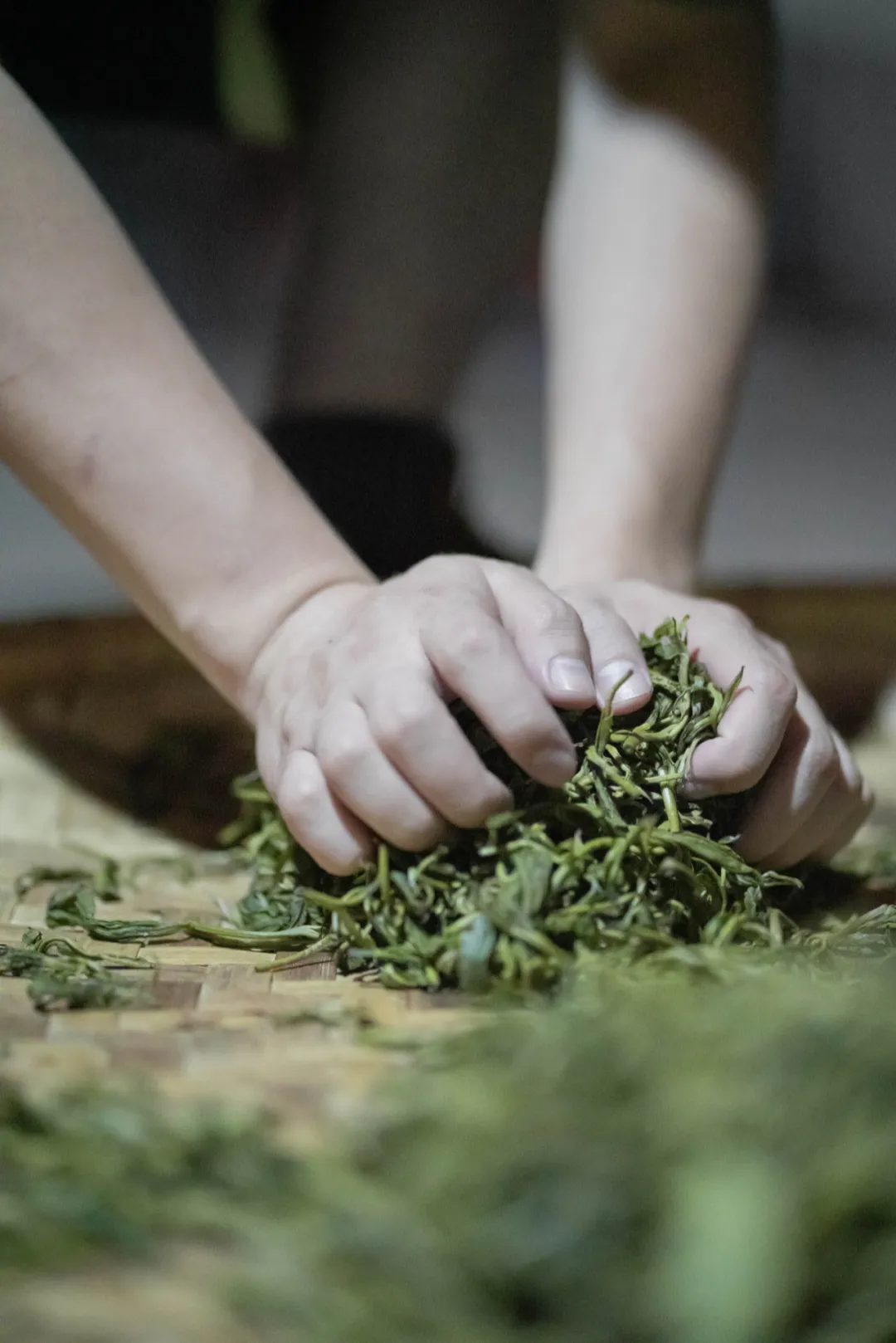
That quality teaches us how to drink it. In the morning I place dry raw Pu’er in a gaiwan and rinse the vessel with hot water. Humidity and warmth awaken the leaves: they visibly soften, and their dull green becomes moist and lustrous. Pu’er processing does not kill the leaf outright. It lets the leaf fall gently asleep.
Before adding hot water, put on the lid and lightly shake the gaiwan. Its warmth and moisture lift the leaves from deep sleep. Waking gently is a good way to begin a day. Bring the lid to your nose: the tea is releasing life that has been stored for a long time.
In the first sip, forest air, flowers, and cloud mist return you to the place where the tea once grew. As you continue, aroma and flavour alter with every infusion. Even when the river begins to level out, you remain beside the tea and feel its afterwaves—the stillness of a leaf landing on a lake.
3. Transformation
Yunnan tea holds a secret called transformation. We usually taste tea by smelling and drinking it, by observing the colour of the liquor, and by sensing how it moves through the body. Yet we often neglect the influence of time—an influence that no human effort can reproduce.
Yunnan’s large-leaf, tree-form tea plants contain more polyphenolic material than small-leaf shrubs. The lighter processing used for raw Pu’er can preserve the leaf’s vitality and allow it to transform during storage.
As Pu’er is stored, tea polyphenols oxidise and break down, producing more of the substances that shape the liquor’s flavour, including theabrownins and thearubigins. Meanwhile, microbial communities living on the compressed cake continue to work. They break down polysaccharides that we could not otherwise taste into simple sugars that dissolve in water. The liquor gains body, viscosity, sweetness, and complexity.

Strangely, the aromatic path of Pu’er follows the natural life of a plant: green grass, flowers, fruit, wood, and medicinal herbs. It also reveals a cycle of existence. Imagine that a human life has only four seasons. In autumn we begin to decline, our slowed bodies salted by the wind. In winter we become old people who carry death in a pocket wherever we go and smell faintly of herbal medicine. Before that, however, we flowered and bore fruit from a life full of energy.
Middle-school biology taught us that all the cells in the human body are replaced every seven years. Physically, after seven years we are no longer the same person, but consciousness continues inside this changing shell, generating delusion and attachment. Seven years of making tea have changed my life beyond recognition. Time, exceeding our finest imagination, has transformed not only the leaves but me.
4. Jingmai and following nature
In the summer of 2015 I returned to Shaxi from rain-soaked Jingdezhen. The tea room was surrounded by bright porcelain. These fragile, chiming things filled the windowsills, floor, and tea tables, and on average one piece was accidentally broken every week.
I wanted to go into the tea mountains and learn, but I knew no growers. It was like the story of someone drawing a circle on the ground and shutting himself inside it. I wondered whether there was a way to cross the boundary of one’s own knowledge.
Later I met a university teacher from Beijing who brought his students to sketch in Shaxi. His wife happened to be Lahu from Lancang. Through that coincidence, I went to Lancang in early autumn, and from there to Jingmai.
Jingmai Mountain contains vast tracts of ancient tea gardens. More than fourteen centuries ago, Dai people migrating through Lancang saw a golden deer that seemed to guide them. They followed it all the way to Jingmai. Before he died, their leader told his descendants: leave money and it will be spent; leave cattle and they will fall ill; only the tea trees of Jingmai will sustain generation after generation and make the people prosperous.
Jingmai buds are long and slender, covered in thick, silver-white down. The leaves are comparatively soft and thin, and freshly picked leaf already carries a clean floral scent. Once made into sun-dried maocha, the liquor is fresh and lively, with clear bitterness, astringency, and a rising honey-orchid fragrance.
Jingmai has a warm, rainy subtropical monsoon climate. Magnificent banyan trees are everywhere, their roots entangled and crowns spreading wide. Offerings are often left beneath them, because the Dai believe ancestral spirits dwell in the great trees.
Tall deciduous trees filter direct sunlight into scattered light that tea plants can use efficiently for photosynthesis. Seas of cloud are common in the morning. Clouds seem to gather like living things, surging up from the foot of the mountain and wrapping villages in white mist.
Rain often arrives at dusk. Purple lightning crosses the sky, the whole world flashes bright, and drops scatter against the transparent roof of the tea-drying shed. Before the downpour takes hold, we roll the outdoor bamboo mats and carry the tea inside. The sudden rain releases the day’s damp heat; the body opens and the heart feels lighter. Sitting beneath the eaves, watching rain and drinking tea made that day, the tea in the cup takes on a different meaning when our attention turns outward and reconnects with nature.
On Jingmai I met a Dai tea grower whom I call Yannan. He had dark skin, a broad forehead, shorts and sandals, and a slightly fierce appearance, but he spoke softly. The first time he met me in Lancang, we also picked up a young woman who was having dental work done. She was Han Chinese and worked as a nurse in a Lancang clinic; I call her Li Juan.
Later Li Juan married Yannan and moved to Jingmai. She befriended the Dai women of the village and, like them, wore a long Dai skirt during ancestral rites. She wrapped red-sugar sticky-rice cakes in lotus leaves and distributed them outside the Theravada Buddhist temple. Village elders chanted scriptures in Dai while everyone gathered silently around candlelight. At lunch, rattan tables were arranged across the square before the temple.
The same communal world appears at the Water-Splashing Festival, ceremonies for the tea ancestor, and the beginning of Buddhist Lent. Divine intention guides everyday life. Individual success and formal education can seem secondary on Jingmai. If you have ever watched ants move house or bees gather nectar, you may better understand the Dai.
Like many Dai men, Yannan loved drinking. When I first arrived, he took me to at least one drinking party every day. As excitement rose, people stood to sing toasting songs in Dai, cried ‘wo-wo,’ and emptied their cups. At first it was novel. Later, whenever it began, I hid indoors and slept.
Yannan was once hospitalised when too much alcohol caused encephalitis. After that he said he no longer drank; he merely went out ‘to eat.’ His sense of time and place became confused. Once he took us to Dazhai for the Water-Splashing Festival and we all froze before an empty square. Then, from one day to the next, the confusion began to settle. It seemed that Yannan had genuinely understood something.
After making raw Pu’er with him for two years, I wanted to process Jingmai leaf in other ways. We tried sun-dried black tea and white tea. Unexpectedly, the white tea was quite good. As withering deepened, vivid green leaves dulled and some turned red or brown. They dried quietly in bamboo baskets and settled lower. Bitterness receded through oxidation, the floral fragrance grew clearer, and a sweet, glutinous note like bamboo-wrapped rice appeared.
With Yunnan tea, what the material already is seems more important than what people can do to it. Its quality has formed in nature long before processing begins. The Dai of Jingmai show something similar: people live calmly with nature and rarely insist on themselves. Following nature is another of Yunnan tea’s secrets.
5. Tea and the body
New raw Pu’er resembles green tea. In traditional terms it is yin: rich in active substances and capable of irritating the stomach. Storage transforms this character and makes the tea gentler.
White tea made from Yunnan material can be similar. Without time, it may have freshness but lack softness.
Ripe Pu’er is yang. People originally tried to shorten the years of microbial fermentation undergone by raw Pu’er, but created an entirely different tea. In two months, beneficial microbial communities—including Aspergillus niger, yeasts, and Rhizopus—use the tea as nourishment, multiply, and continuously break down polysaccharides and fibre. More water-soluble substances are produced. The activity of the leaf decreases, while the liquor becomes thick, smooth, glutinous, and a bright dark brown. If such tea has not been mishandled, drinking it can feel nourishing to the stomach and settling to the mind.
Black tea made from Yunnan large-leaf material is also yang. We often choose wild-type tea trees—plants not domesticated by humans. They grow entirely in natural environments, with tree-like trunks, broad crowns, and only one main budding season each year. Their buds lack obvious down and their leaves shine with a waxy lustre.
When this wild leaf is made into white tea or raw Pu’er, the green aroma can be difficult to remove. Its forceful wild character can be hard on the stomach. Black-tea processing brings it into harmony: large quantities of polyphenolic material break down during oxidation, encouraging aroma and flavour to form. Exploring the raw material teaches us how it wishes to be treated, and what treatment will bring the most fitting pleasure.
In The Spirit of Tea, Frank Hadley Murphy argues that tea’s effect on the body cannot be reduced to caffeine. Tea contains many active substances—L-theanine, polyphenols, theophylline, flavonols, and more. The changes of mind and body we experience while drinking result from these compounds acting together. Research focuses too narrowly on caffeine and neglects the whole: ‘Coffee and tea contain so many pharmacologically active substances that the action of caffeine cannot be isolated from all the rest.’
At its best, tea gathers the mind and focuses attention without making us excessively excited. Things become clear and coherent. We can remain in that state while drinking and perhaps carry it into the rest of life.
I do not recommend excessive tea. Following the principle of diminishing returns, the pleasure and calm it brings eventually ebb like a tide. Overstimulated, a person talks nonsense and cannot sleep.
Tea can be a way of restoring balance, but only when accompanied by awareness of our situation. Season and bodily feeling help us choose what is suitable now. In spring and summer, when yang energy rises, raw Pu’er, green tea, and white tea suit an afternoon. In autumn and winter, ripe Pu’er, black tea, and charcoal-roasted oolong may be more fitting.
6. The forest and the path
Yiwu borders Laos. Since the Ming dynasty, these mountains have supplied tribute tea to the imperial court. The reason carried a strong political symbolism. A small-leaf form that emerged in Mansa was light and delicate. Placed in hot water, the leaves did not sink completely but hung upright, symbolising that ‘the realm of the Great Ming will stand forever.’ Court attention helped Pu’er become widely known.
By the Qing dynasty, harsh policies drove growers to cut down the large tea trees planted over the previous century, burn their houses, move away with their families, and conceal their names.
From 2017 onward we went to Yiwu to make tea. On many pale-blue, hazy mornings, we waited at the entrance to state forest for Yao growers with picking rights to carry out fresh leaf and divide it among buyers. Many people like us waited there. At first everyone queued, talking and laughing. The moment the leaf appeared, the crowd surged forward and the line meant nothing. We did not know how to bargain and usually ended up last.
After some time, I resolved to stop blindly chasing famous origins and to stop treating the capture of one basket of fresh leaf as the earned result of tea-making labour. What a wave gives, a wave will take away. In Yiwu I often thought about the story of Mansa.
After that, we took material only from a few fixed plots and participated in their monitoring and care over the long term. My favourite is a community of tea trees in the forest. We drive to a slope far from the villages. Below it are mixed small trees, followed by older tea trees deeper in. Walking toward the valley, we meet a barrier of trees, silvergrass, and vines. Cross that natural threshold and we enter the forest. There is no longer any sign of cultivation, only a path almost invisible to the eye.
Wild chestnut, baidua trees, and poplars close over the sky. The true ancient tea trees hide in the forest, and it takes two hours to visit them all. After rain, buds gather and press upward through hard, woody bark. Alongside birds, insects, and wind passing through the canopy, you can hear the leaves budding—a sound rather like what we hear when we cover our ears.
Like a dream from a fable, we climb the trees, break off tender new shoots, and place them in our baskets.
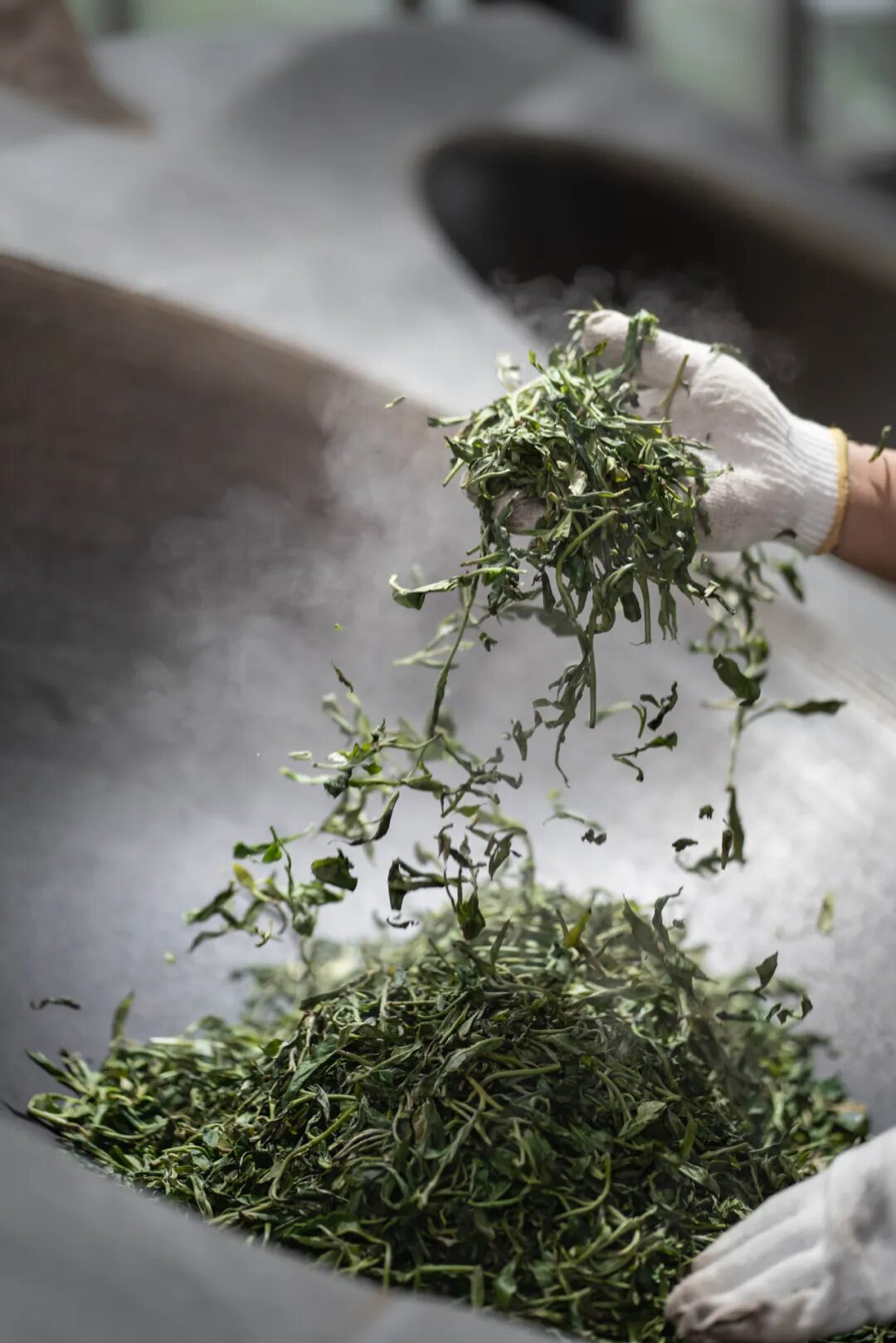
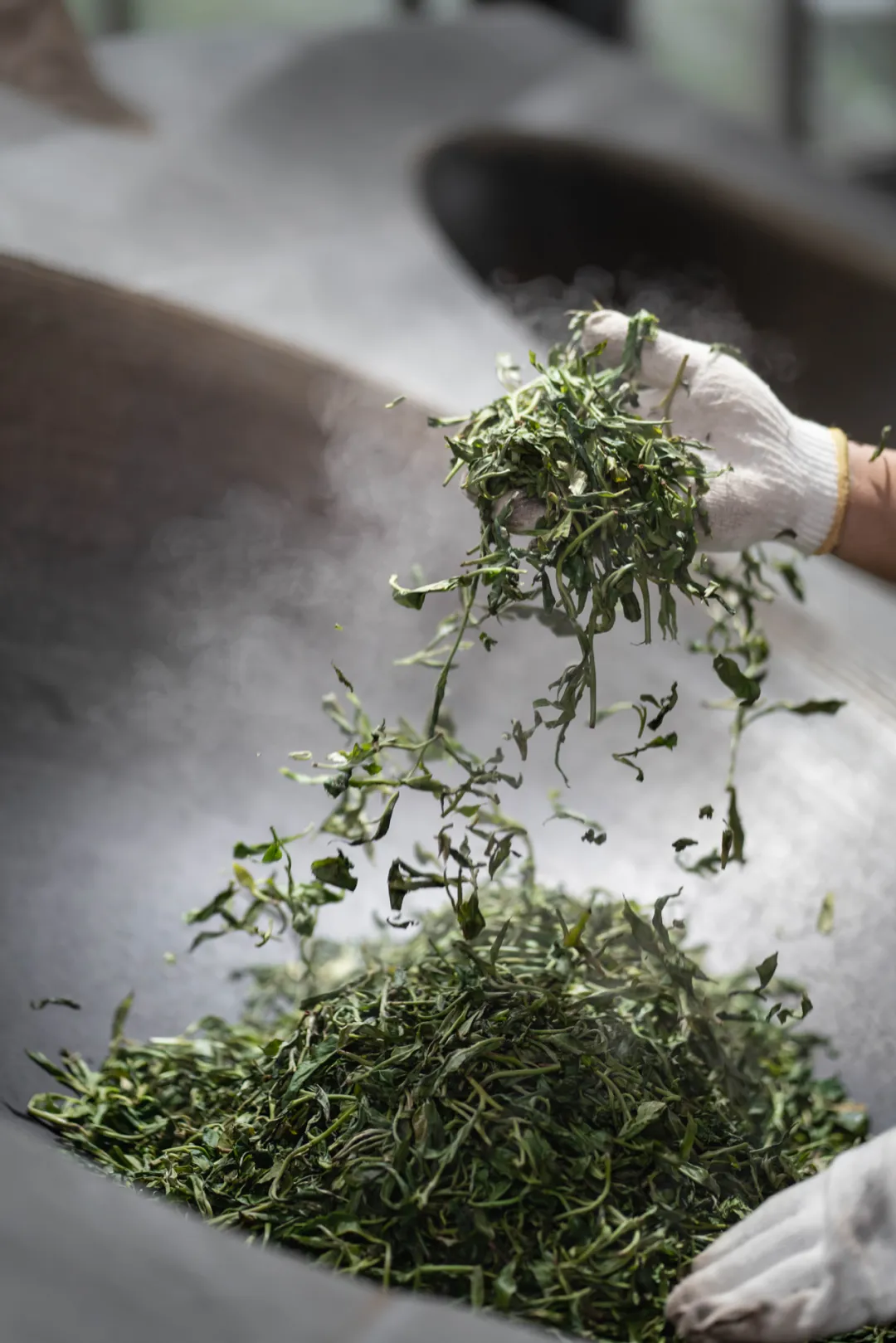
We build a wood fire and the flames lick the bottom of an iron wok. When it grows hot, I bring a hand close to the surface; the heat curls the hair on the back of it. We throw in the tender green leaf. As it touches the wok it snaps and crackles, releasing a cloud of white steam.
Turn too slowly and the steam smells scorched. Turn too fast and the leaf loses water too quickly, becoming yellow and dry. Only under the right conditions does it surrender moisture slowly and in order. Enzyme activity is arrested while polyphenols are preserved. The tea enters something like sleep. Low-boiling aromatics, such as grassy smells, are removed; higher-boiling aromatics, such as flowers and honey, sharpen and rise. The leaves curl quietly while retaining flexibility and a bright sheen.
This stage is called shaqing, ‘killing the green.’ Fresh leaf must undergo it whether it will become raw or ripe Pu’er. Repetition and intense concentration can bring the person working the wok into a meditative state. When someone is handling the elements of fire and water at once, only attention can carry them along the one narrow path.
Experience tells me that scattered thoughts gradually loosen under concentration. Sometimes, when we speak of ‘making tea,’ we really mean its apparent opposite: becoming oneself.
That is the last secret I want to share. We do not need tea in order to receive many of the experiences tea gives. Through drinking it, we find awareness, introspection, and harmony of spirit. We more readily accept the roles life’s script has given us. We also find courage to move beyond the conditions that once confined us.
Meditation, yoga, climbing, swimming, or woodworking can offer the same capacities. The important thing is not dependence on an external object. All roads lead to Rome—but do not forget that we have always been the road itself.
‘Yannan’ and ‘Li Juan’ are pseudonyms. Text: Gu Rui. Images and original edit: Luo Bo.