
Translated from the original Chinese essay published by Changshou.
Direct perception
In Six Memos for the Next Millennium, Italo Calvino tells a story worth remembering for a lifetime.
Zhuangzi was a superb painter. A king asked him to paint a crab. Zhuangzi said, ‘I can, but you must give me five years.’ The king agreed. Five years later he came for the painting, and Zhuangzi said, ‘I need another five years.’ Five more years passed. When the king returned, Zhuangzi fetched his brush and ink and, in a single movement, painted a crab of unprecedented perfection.
Calvino probably invented the story, but its meaning reaches farther than we can imagine. It tells us that feeling the world is the foundation of artistic expression; perceiving something matters far more than simply doing something.
After moving house, I had to take the dogs out twice a day. Whenever I brought my phone, I followed the same route, because I was always looking down at the screen and could not manage an unfamiliar road. With the phone beside me, walking the dogs became mechanical and dull.
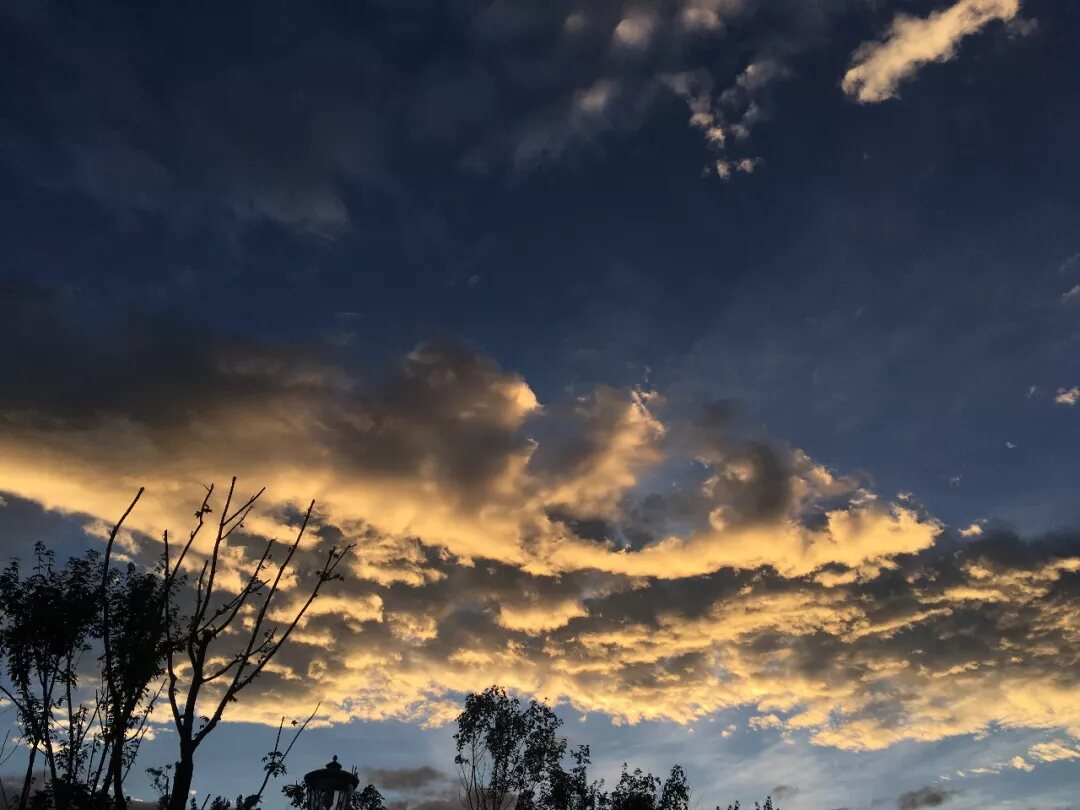
But when I forgot it, the rivers, tree shadows, the brilliant transformations of the daytime sky, and the quiet night wrapped in insect calls all came clearly into view. I began to open my eyes to the world. I wanted to take out my phone and photograph it—then realised that I could see all of this precisely because I had left the phone behind.
Once I noticed that, I began leaving the phone at home. I tried to take the dogs along a different route each time. It became my way of exploring the world.
My problem is also the problem of modern people. We have received too much education, too many ideas, and tools for receiving information that are too advanced. Yet these tools offer only second-hand materials and concepts: things already processed, quantified, and interpreted by other people. Absorbing one manufactured idea after another through books and screens, we imagine that we are deepening our knowledge of the real world. In fact, we are drifting farther away from it.
A smartphone alone can provide an endless supply of second-hand material. It immerses and numbs us, strips away real feeling and perception, and makes us blind to the actual world before our eyes.
After staring at a screen for too long, we often feel dizzy when we look up. It resembles the dizziness of riding in a vehicle: the vehicle is moving, but your body has not swayed and adjusted with it. Immersion in second-hand material creates the same problem. Time has passed, but you remain suspended in another space and time.
A person becomes almost like walking wood.
Learning to see again
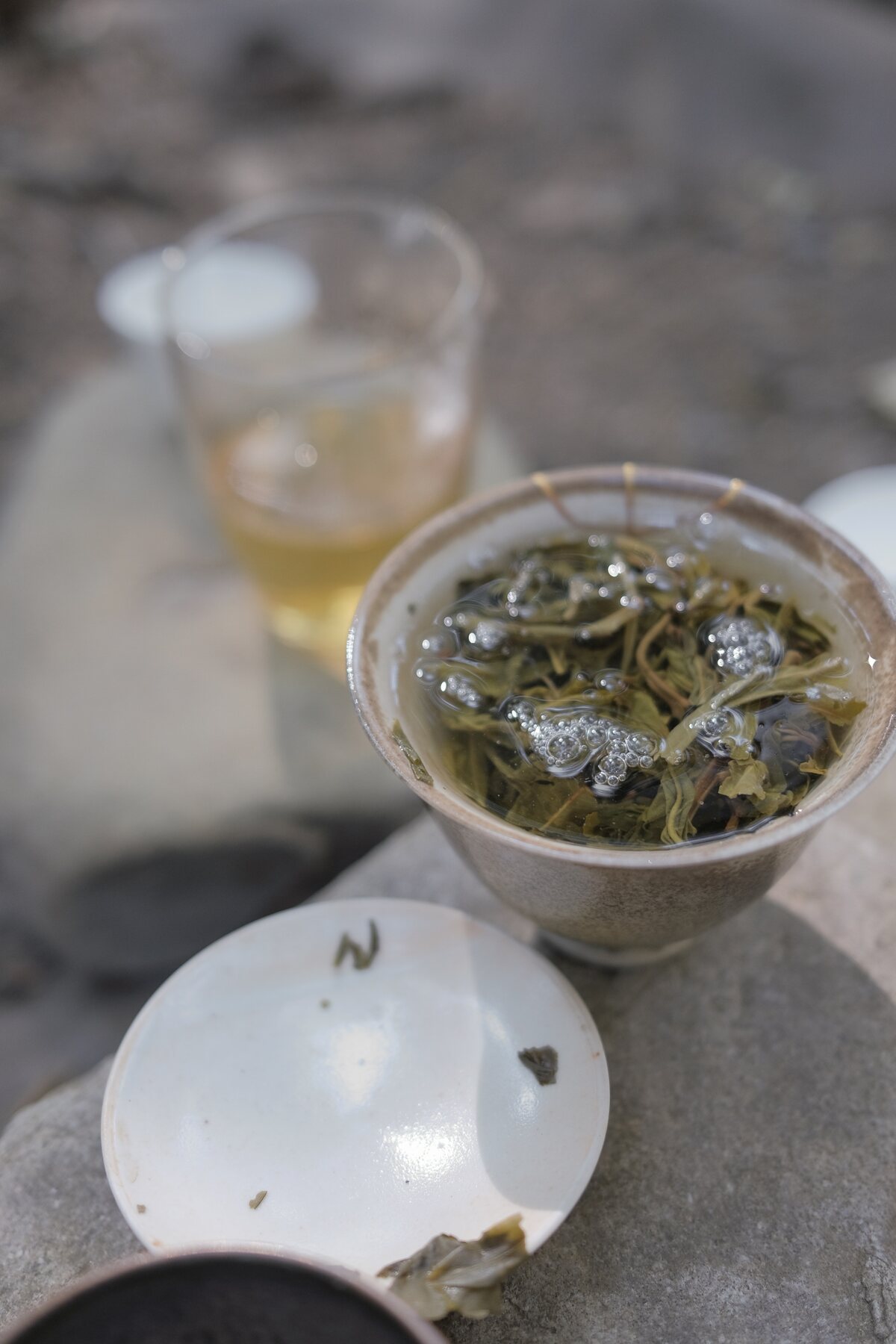
People have forgotten how to look at the grain of a leaf: its oily sheen, the angle at which it reflects light, and the symphony made by countless leaves on a tree constantly moving and returning light. We have forgotten the curve traced by swallows circling down to their nests, and how evening clouds open into limitless layers of colour.
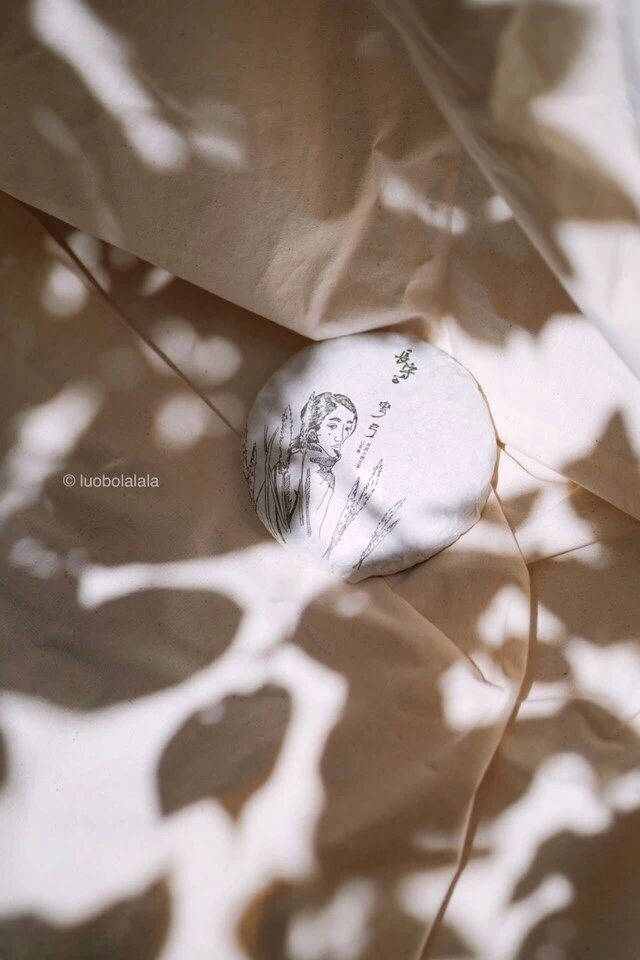
In the natural world, even the smallest thing contains inexhaustible detail—far richer and more particular than anything the internet can provide. Look closely at a single leaf and you see its veins, then the glints that appear as it turns in the wind. Soon you see more leaves, then the whole tree. This endless community of light sways in the wind, reflecting brightness in infinite combinations. Someone who is truly aware might become absorbed in it, watching all day, intoxicated by the sight.
To go further is to reach the old saying: ‘It is easy to stand among thorns; it is hard to turn beneath the bright moon at the curtain.’ Yet most people remain numb even before the clear moon above their heads, living inside a world fabricated by concepts.
There is a famous remark by Picasso: ‘It took me four years to paint like Raphael, but a lifetime to paint like a child.’
Picasso certainly painted better than a child. What he meant, I think, was the way he experienced the world while painting: like a child, without conditioning, concepts, or prejudice. When he painted an apple, he saw that apple rather than his own liking or dislike of apples.
Aldous Huxley wrote that when Monet painted water lilies, ‘the water lilies were their own standard.’
Many painters’ late work is full of childlike innocence—Wu Guanzhong, Huang Yongyu, Morikazu Kumagai, and others. They were not imitating children. They were putting down preconceptions, burdens, concepts, and technique. They recovered direct perception and expressed on paper the richest and most delicate feelings of the heart.
What, then, is direct perception? Put another way, it is seeing things as they are—seeing the world of reality.
Impermanence
The world of appearances and the world of reality are one and the same. Yet someone who sees reality lives in an entirely different way—perhaps what we could call an intelligent or awakened life.
To see things as they are is to perceive the truth of life. I do not think that truth is suffering, nor is it pleasure. The truth of life is life itself: impermanence itself. Everything flows, and we belong to all that flows. Someone who sees this joins that movement, no longer clinging to personal gains and losses or imagining themselves to be exceptional.
Impermanence reveals the truth of time. Whatever we do, time passes, and what we do becomes an eternal and unalterable act. In that sense, every action and decision matters enormously. You realise that everything happens only once; that no one steps into the same river twice; that even if tomorrow resembles today, tomorrow will not be today. Once today has passed, it has passed forever.
Here Buddhist thought and existentialism arrive at the same place. Both emphasise that we inherit the consequences of our own actions and must take full responsibility for them.
What we must do is open perception, recognise the truth of impermanence, accept it, and grasp the moment it offers.
‘It is as though a crushing weight were suddenly set down: the clamour of the self—its vanity, wrong views, illusions, desires, and disappointments—falls silent.’ (An Introduction to Buddhism)
An awakened life is therefore more responsible, but it is also lighter.
Modern people seek more varied stimulation and a broader range of experiences. But if the gate of perception is closed, travelling to more places and reading more books cannot heal our sense of lack. If that gate is open, any small natural thing can move us without limit.
Only when we live with perception do travel and reading become things that are lovely to have but not necessary. Then we can be at ease in our own lives rather than treating them as a barren desert from which we must escape to earn a brief rest or reward.
The grapes were always there
What does the experience of awakened perception actually feel like? A passage in Late Quiet may offer an answer.
Xia Chong went to see a friend’s grape arbor because he had heard that the grapes were plentiful and delicious. ‘But where are the grapes?’ he asked, staring at the vines in confusion. ‘Look carefully,’ his friend replied.
Suddenly he saw them. Green fruit emerged from beneath green leaves, countless as grains of sand in the Ganges.
Xia Chong had finally seen the grapes, but they had been there all along. Nothing had changed. Yet for the person who sees, everything begins to carry a different meaning. What we call ‘truth’ reveals itself plainly before their eyes.
Besides the books mentioned above, I also recommend The Doors of Perception, The Monk and the Philosopher, the Don Juan trilogy, The Peregrine, Non-Planar, Zen in the Art of Archery, and Zen and the Art of Motorcycle Maintenance.
Of course, reading them may be good, but not reading them is fine too. What matters is remembering to perceive the world directly—and remembering to leave your phone behind when you walk the dogs.
Illustrations in the original Chinese article: Gu Rui and Luo Bo.